This post is also available in:
 日本語
日本語  Türkçe
※この記事内にはプロモーションが含まれています。
In Japan, university students typically begin job hunting (就職活動 / shūkatsu) in their third year and secure a job offer (内定 / naitei) by the first half of their fourth year. According to a survey of students graduating in April 2025, an astonishing 98.8% of job seekers received a job offer before graduation.
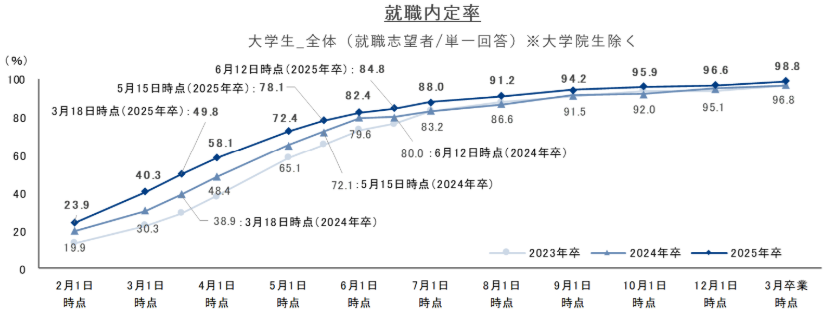
Thanks to this unique system, students in Japan can secure employment before gaining any work experience, making the country one of the most structured and reliable destinations for new graduates seeking stable employment. Japan has the world’s highest rate of students receiving job offers while still in school. For those who want to graduate with a job already lined up, studying and job hunting in Japan is an excellent choice.
- The basics of new graduate recruitment in Japan
- Job hunting methods and resources
- The standard job hunting schedule
- Preparation steps for foreign students
- Key Japanese terms every job seeker should know
- What Makes Job Hunting in Japan Unique
- Resources for New Graduate Job Hunting in Japan
- Job Hunting Schedule for New Graduates in Japan
- Preparations Before Applying to a Company
- From Application to Job Offer
- Summary
What Makes Job Hunting in Japan Unique
Job hunting in Japan is very different from other countries. Understanding its structure will help you adapt, avoid surprises, and maximize your chances of securing the right job.
A Strict Schedule

Much like university entrance exams, the job-hunting process follows a clear timeline. For example, if you want to start working in April 2026, recruitment begins in March 2025. However, students usually start preparing up to two years in advance by researching companies and joining internships.
Companies Hire for Potential, Not Just Skills

Unlike many countries where specific experience is required, Japanese companies hire graduates based on potential and personality traits. New hires undergo training programs before being assigned to departments.
- Education background (prestigious universities are valued over field of study)
- Japanese language and communication skills
- Initiative and proactiveness
- Teamwork and adaptability
- Fit with company values
Lifetime Employment

Although this is changing, many Japanese companies still maintain a lifetime employment system that provides employees with lifelong job security. As long as the company remains solvent and employees follow company rules, they will not be fired unless they resign voluntarily. If you’re seeking a stable career with guaranteed lifetime income, working for a Japanese company can be an excellent option.
Seniority-Based Promotions

Japanese companies generally employ promotion systems based on seniority and age, believing that long-term employees are most familiar with company operations and can contribute more effectively to organizational success.
Membership-Based Employment
In Japan, companies hire new graduates and train them from scratch. After providing the necessary training, new employees are assigned to departments based on company needs. Generally, when new graduates are hired, there are no restrictions on their assigned tasks or work locations. Over time, they may be transferred between departments or relocated to different offices.
Employees are expected to take on any role according to company needs, and in return, they receive guaranteed lifetime employment.
Job Types in Japanese Companies
Japanese companies generally hire people for the following three job categories:
Job Rotation System
Japanese companies expect their employees to remain with the company long-term and eventually advance to managerial positions. Therefore, employees are expected to work across various departments and become familiar with the company’s overall operations before reaching management roles.
Resources for New Graduate Job Hunting in Japan
Websites

Hundreds of websites are available for new graduate job hunting in Japan. Since it’s impossible to introduce them all at once, we have categorized them by their intended use and will highlight key examples in each category.
General Job Hunting Websites
These sites allow you to research companies in one place, obtain information on application schedules, and find details about various events such as company information sessions. You can then use these platforms to apply directly to companies.
Mynavi(マイナビ)

- The most frequently used and most satisfying website for new graduates
- Number of registered companies in 2024: 32,349
- Purpose of use : Research and apply to companies of interest
- Site language : Japanese
Rikunabi(リクナビ)

- Similar concept to Mynavi
- Recommended to use alongside Mynavi, as it features some company job postings not available on Mynavi
- Purpose of use : Research and apply to companies of interest
- Site language : Japanese
Job Hunting Websites Specializing in Specific Fields
These sites feature job postings specific to particular industries and target narrower audiences, allowing you to obtain more detailed information about companies of interest.
Gaishi Shuukatsu(外資就活)
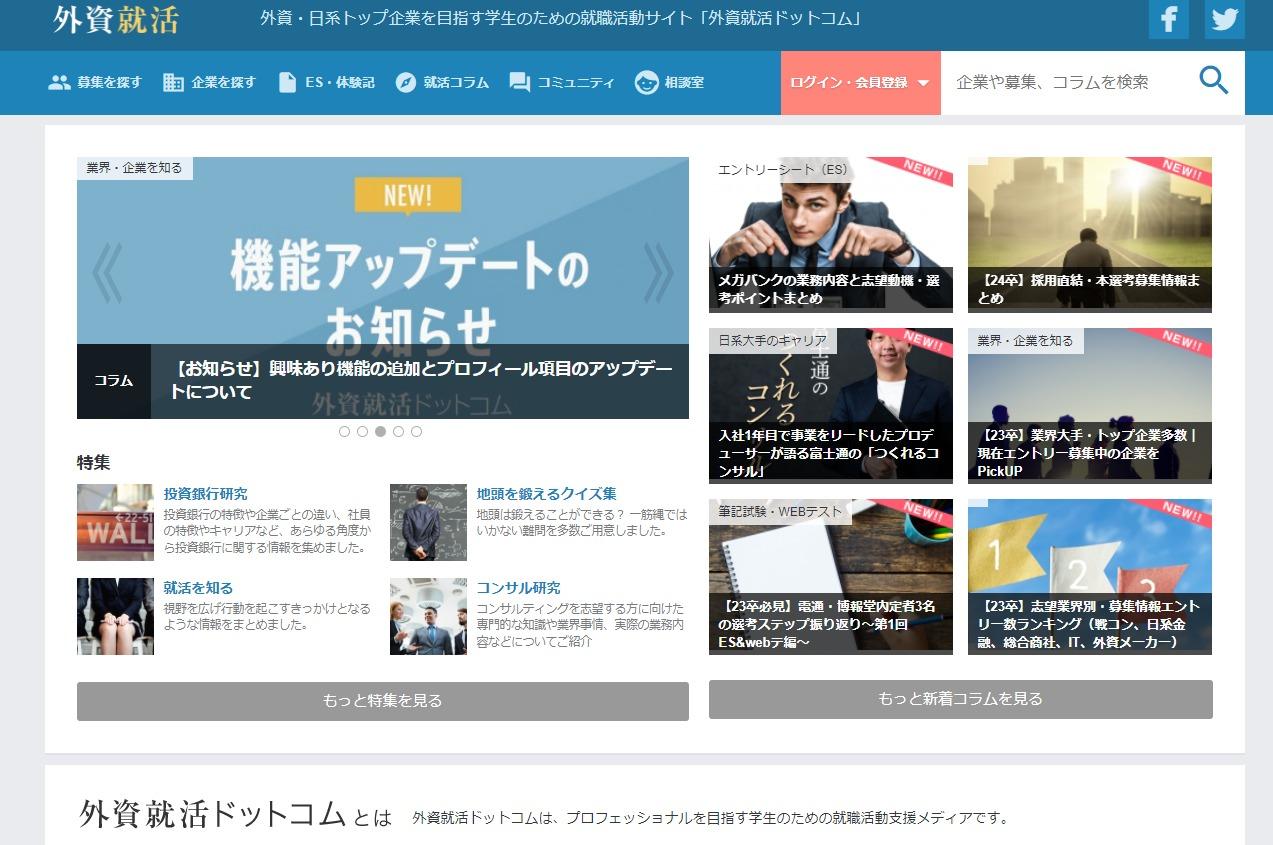
- Foreign Job Hunting (Gaishi Shuukatsu)
- Provides informational articles about jobs, internships, and selection processes at foreign companies and major Japanese companies operating in Japan
- Purpose of use: Company research, applications, and gathering selection process information
- Site language: Japanese
Acaric(アカリク)

- A job hunting site specializing in graduate students
- Hosts numerous networking events connecting students and companies👉大学院生を求める優良企業と出会える少人数制イベント【アカリクイベント】
- Essential resource, especially for PhD holders
- Purpose of use: Company research and applications, direct job offers, and event information for graduate students
- Site language: Japanese

Offer-Based Platforms
On these platforms, you create a profile with your information, and interested companies will contact you directly for interviews. The key difference is that companies reach out to you, rather than you applying to them.
OfferBox

- The most popular offer-based website for new graduates
- Approximately 17,712 registered companies, ranging from startups to major corporations
- 93.6% of students using the service receive job offers
- Purpose of use: Receiving direct offers from companies
- Site language: Japanese
Company Career Pages
Many companies not only post jobs on general job sites but also accept applications directly through their own websites. Once you have identified companies of interest, visit their official websites to apply. Below, we introduce the application pages of three companies that are particularly interested in recruiting international students.
Foreign Student–Focused Sites
In recent years, as Japanese companies have faced domestic labor shortages, numerous job sites specializing in recruiting overseas new graduates and talented international students living in Japan have emerged. These platforms post job opportunities specifically targeting international students, significantly improving your employment prospects. However, since the number of posted positions is limited, we recommend using these sites alongside the general job platforms mentioned above.
See the next section on recruitment agencies for more information.
See the next section on recruitment agencies for more information.
See the next section on recruitment agencies for more information.
Recruitment Agencies
Ryukatsu
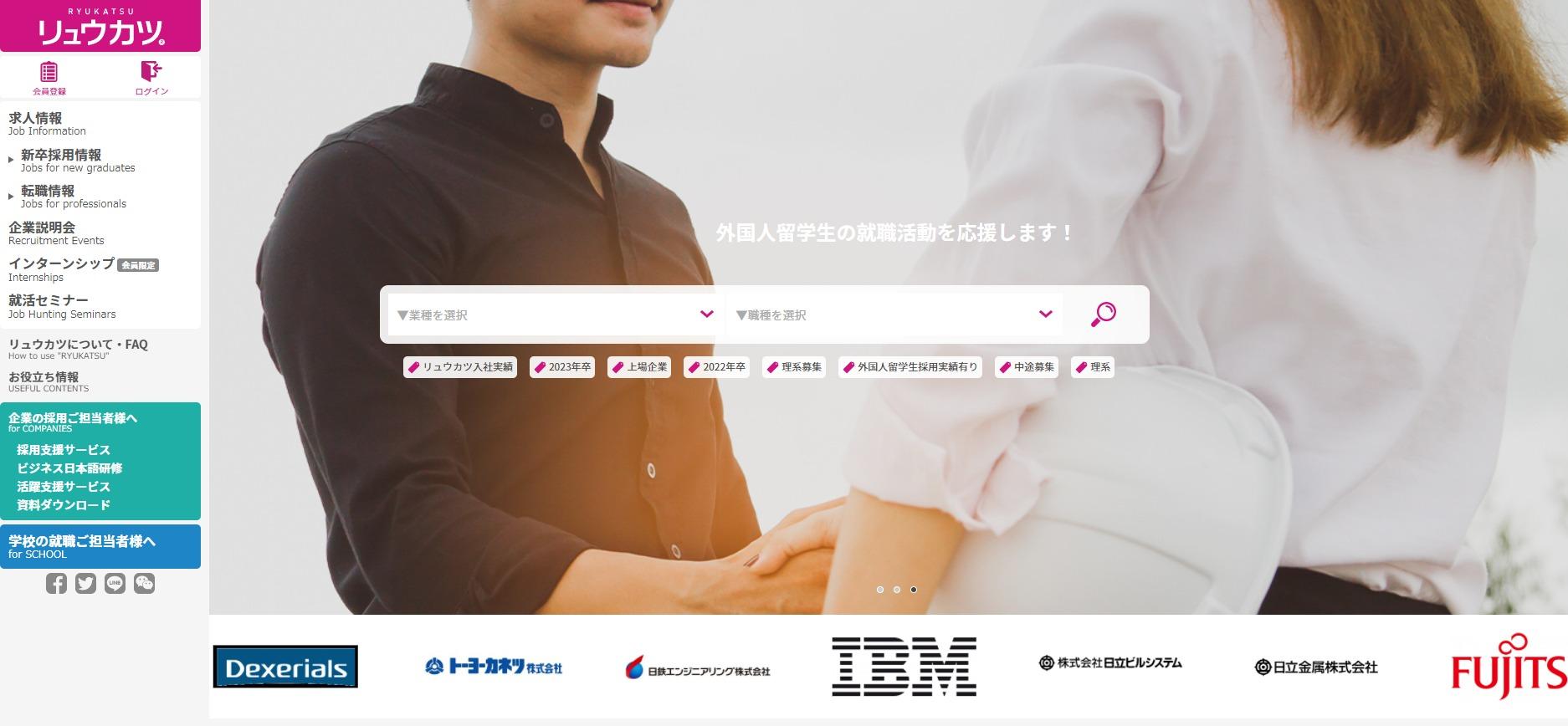
- This website is specifically designed for international students seeking employment in Japan, as well as foreigners with work experience looking to start a new career in Japan .
- Once you have filled out the required information, you can apply for a job and Ryukatsu’s career counselors will support you throughout the application process.
- You can also get information about company information sessions for foreigners in Japan and apply for internships.
- Purpose of use: Access job opportunities for foreigners in Japan with career counselor support
- Site language: Primarily Japanese (some English available)
Job Tree Japan
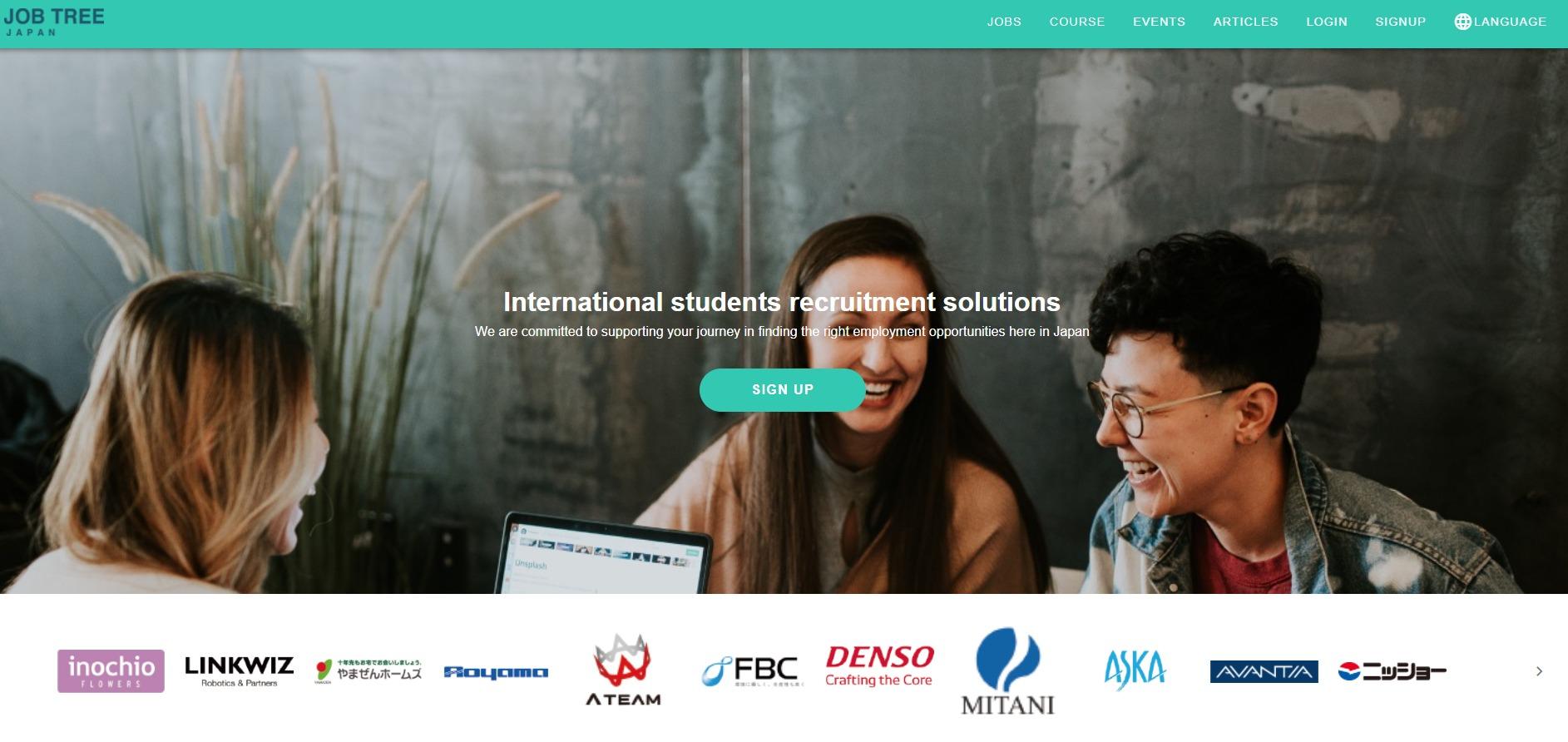
- A service exclusively for international students seeking employment in Japan
- After entering your information, you can search and apply for suitable positions with career counselor support
- Provides ongoing support for any issues before starting work
- Purpose of use: View and apply for job postings targeted at new foreign graduates in Japan with career counselor support
- Site language: Both Japanese and English supported
Fast Offer
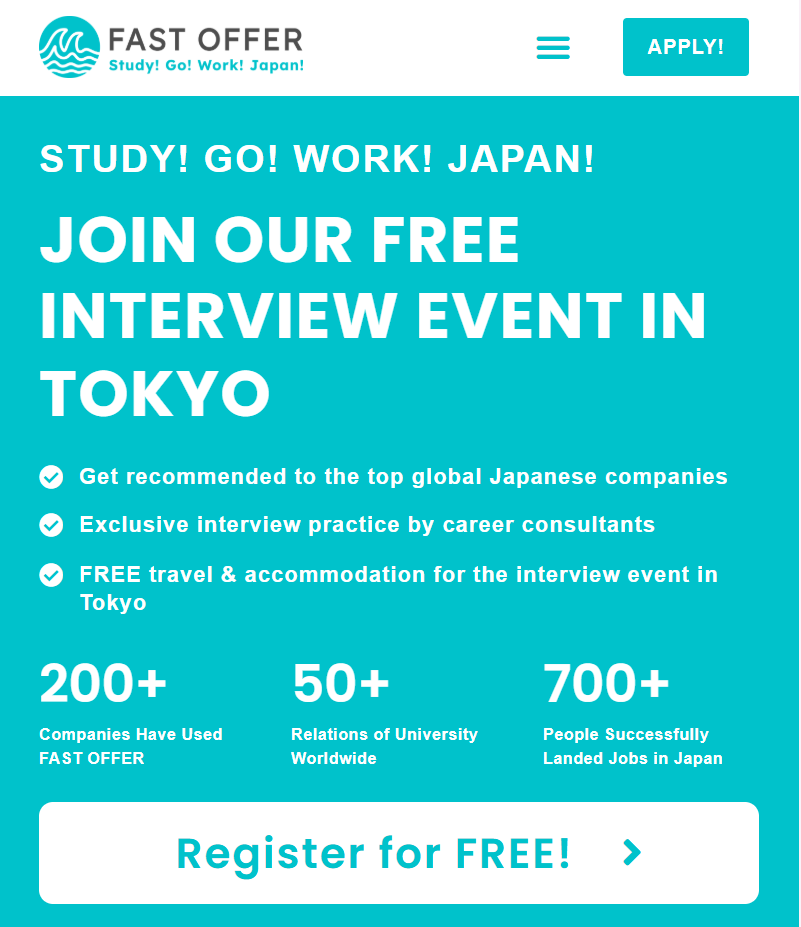
Fast Offer is a program connecting foreign talent seeking careers in Japan with Japanese companies through fully sponsored interview events in Tokyo.
- Connects international students in IT, engineering, and social sciences with Japanese companies, helping global talent find work in Japan
- Hosts free monthly interview events in Tokyo, including round-trip travel, orientation, interviews, and company visits
- Collaborates with universities across Asia and Australia to provide Japanese language courses and faculty-specific support
- Application process includes online pre-screening, individual consultation, interview preparation, and additional guidance as needed
- Eligibility requirements: university degree, age 26-30, basic Japanese proficiency (JLPT N4 to N2). Requirements vary by major and experience
- Successful applicants receive job offers from leading Japanese companies with comprehensive support from the Fast Offer team
- Site language: English
Acaric Shushoku Agent

“Acaric Shushoku Agent” is a powerful support service for graduate students’ job hunting. Specializing in Master’s, PhD, and postdoc careers, it helps you leverage your research experience to find the right job.
Key Features:
- Dedicated advisors: Graduate alumni personally support your career path
- Extensive company network: Over 15 years of experience, partnered with 3,000+ companies
- High job offer success: 80% final interview pass rate, with job offers possible in as little as 2 weeks
- Wide range of opportunities: From major corporations to niche leaders valuing research skills
- Completely free service: Full support including self-analysis, application review, and interview prep
It’s the ideal service for graduate students who want to balance research with job hunting and put their expertise to use in society.

Career Fairs

At career fairs, you can visit multiple companies in one location and attend various company information sessions. These events allow you to speak directly with company representatives and learn about their perspectives and expectations regarding foreign student recruitment. It’s important to demonstrate your interest by actively asking questions and engaging with recruiters. You can stay updated on upcoming career fairs by registering with job information sites such as Mynavi and Rikunabi.
University Career Center
Your university’s career center should be your first stop when beginning your job search. When utilized effectively, it can lead to rapid employment success.
- Hosting job hunting information seminars
- Organizing company information sessions
- Sharing job opportunities received by the university with students
- Facilitating contact with alumni working at companies of interest
- Maintaining and providing records of previous students’ job search experiences
Government-Provided Services
The Japanese government has established service centers in Tokyo, Nagoya, Osaka, and Fukuoka to provide job hunting support for foreigners in Japan. You can find the websites and contact information for these service centers by clicking here.
Job Hunting Schedule for New Graduates in Japan
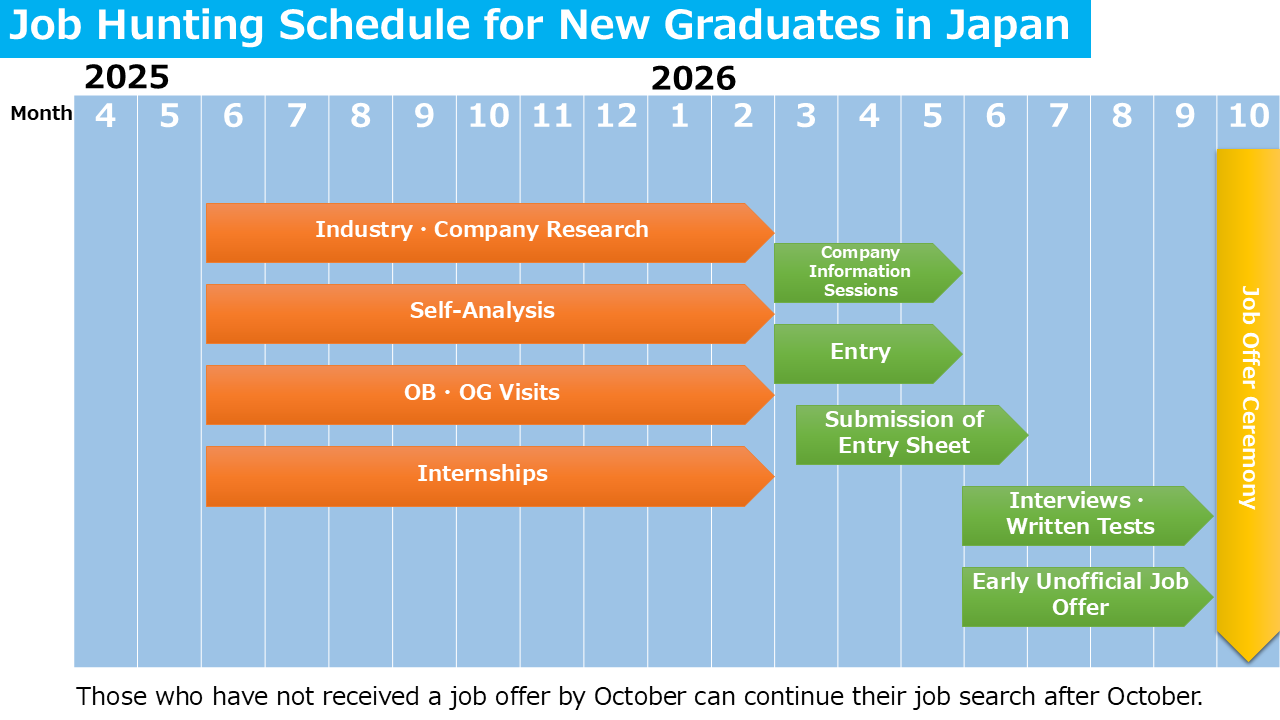
- The above schedule applies to companies that are members of the Japan Business Federation (Keidanren). Foreign companies and small to medium-sized enterprises may not follow this schedule and often make job offers throughout the year.
- This schedule is gradually changing even at major companies, with an increasing number offering job opportunities earlier in the process. Therefore, the sooner you begin your job search, the better your prospects. If you start your job search two years before graduation, you will have ample time to conduct a thorough job hunt.
Preparations Before Applying to a Company
Self-analysis
Self-analysis is a process of understanding your strengths and weaknesses, interests and values, and reflecting on your past experiences to reconsider your future goals before starting your job search. Through this process, you can deepen your self-understanding and gain a strong foundation for finding the ideal job.
Discover Yourself in 5 Minutes with Career Park’s Self-Analysis Tool!
Career Park offers a self-analysis tool specialized for student job hunting. This tool called myanalytics, a free AI-powered assessment that helps you identify your ideal career in just five minutes. By answering 36 questions, you can identify your strengths and weaknesses and use that information to create a compelling personal statement. The multiple-choice format makes the test easy to complete and highly accurate. Two-thirds of students use this tool annually for their job search.
Industry Research
After completing self-analysis, you should decide which industry you want to work in. In Japan, you can choose your industry regardless of your major, with the exception of technical positions such as engineering roles.
You can use the following website to conduct industry research:
Company Research
Once you have decided on an industry, you can research specific companies within that sector. You can use websites such as Mynavi(マイナビ) and Rikunabi(リクナビ), as well as company websites and information sessions.
OB・OG Visits

One of the most reliable ways to obtain accurate company information is by speaking directly with current employees. After identifying companies of interest, visit your university’s career center to find alumni who work there. Obtain their contact information and reach out to them. If you cannot meet in person, you can email them with your questions.
If no graduates from your university work at your target company, you can connect with current employees through a service called Matcher to gather information.
Internships
Internships provide opportunities to gather information about industries and companies of interest while testing whether they align with your career goals. Participating in internships gives you a competitive advantage over other candidates and strengthens your performance in interviews. Strong internship performance may even lead to direct job offers.
From Application to Job Offer
Entry
You must apply to receive recruitment information from companies, participate in company information sessions, and submit application documents. After applying, companies will contact you via email or through their systems regarding the recruitment selection process. You can apply through general job hunting websites such as Mynavi(マイナビ) and Rikunabi(リクナビ) or through individual company websites.
Company Information Session
After applying, companies typically provide students with information about their business and selection process. Information sessions are held either in-person in conference rooms or online, with multiple students participating together.
Submit Entry Sheet

Submitting entry sheet officially marks your application to a company. The contents of entry sheet vary by company but generally include the following items:
- Reason for applying
- Self-promotion
- Student achievements
- Resume
On the website “企業の口コミ、ES・面接情報が見れる「就活会議」” where you can access company reviews, application forms, and interview information, you can view entry sheets written by successful applicants to your target companies free of charge.

On the website Carriemon(キャリエモン), you can receive free entry sheet assistance from career counselors and access helpful advice on application documents from other users.

Written Exam
Companies generally conduct written tests as part of their selection process. These tests assess personality and basic knowledge (such as mathematics and English). They are usually administered online, though some companies may invite applicants to a venue for paper-based testing.
The most commonly used test is SPI3, but other options include SPI WEB, TG-WEB, and Tamatebako. You can take free sample tests from the following websites:


Interview

The interview is one of the most critical aspects of job hunting. Questions are generally based on information from your application form, and fluent Japanese responses are extremely important. While it varies by company, you typically go through 2-4 interviews before receiving a job offer.
- Group Discussion: A group of students discusses a specific topic and works toward common understanding. The goal is not to generate brilliant ideas but to demonstrate willingness to cooperate with peers.
- Group Interview: Multiple students are interviewed simultaneously, with each taking turns answering questions.
- Individual Interview: Each student is interviewed by 3-4 interviewers. Both answer consistency and behavior/attitude during the interview are evaluated.
Job Offer

If interviews prove you are a good fit for the company, you will receive a job offer via phone or email, followed by time to consider whether to accept the offer.
Until the job offer ceremony, the offer is merely a “promise” and not a formal decision. By attending the job offer ceremony, you officially accept the offer and the company formally decides to hire you.
At this stage, unless there are special circumstances, the company will ask you to sign a “letter of acceptance of job offer.” However, this document is not legally binding. You can decline the offer after the job offer ceremony, but doing so risks damaging your credibility.
Summary
This article provides a comprehensive guide to job hunting in Japan for new graduates. If you want to find employment in Japan as a new graduate, graduating from a Japanese vocational school, university, or graduate school will significantly increase your chances of success. While securing a job offer through overseas applications has low success rates, it’s still worth pursuing.
Job hunting for new graduates in Japan is a complex process, so if you have any questions, please feel free to contact us through social media or the contact form below. We wish you the best of luck in your job search!
If you found this article or our activities helpful, we would greatly appreciate your support with a cup of coffee ☕✨