This post is also available in:
 日本語
日本語  Türkçe
※この記事内にはプロモーションが含まれています。
Hello! I’m excited to meet you all with this comprehensive article. Today, we’ll explore the topic you’re most interested in: “The Japanese University Admission Process for International Students.” By the time you finish reading this article, you’ll understand how to enter Japanese universities, gain the necessary knowledge for choosing the best university for you, and obtain sufficient information about scholarship programs.
Before reading this article, if you haven’t already seen our article on “8 Compelling Reasons to Study in Japan: Your Gateway to Academic Excellence and Career Success,” I strongly recommend reading it first.
To apply to Japanese universities as an international student, you must meet these fundamental requirements:
- Completion of 12 years of formal education
- Be 18 years or older
- Meet the admission requirements of your target university
- Types of Japanese Universities
- Academic Calendar System
- Key Factors for Choosing a Japanese University
- Types of Admission Methods to Japanese Universities
- Japanese University Tuition Fees
- How to Research Scholarship Information
Types of Japanese Universities
Japan has three types of universities based on their establishment structure. According to statistical data released by the Ministry of Education, Culture, Sports, Science and Technology (MEXT) on May 1, 2024, the distribution of universities is as follows:
*MEXT→Ministry of Education, Culture, Sports, Science and Technology
National Universities: Established by the Japanese government – 86 total
Public Universities: Established by local governments – 101 total
Private Universities: Established by private educational institutions – 624 total
Private universities account for approximately 75% of all universities in Japan.
While there are excellent private universities, the prestige ranking of universities generally follows this order:
National Universities > Public Universities > Private Universities
If you gain admission to national or public universities, your chances of securing scholarships increase significantly, and finding employment at major companies upon graduation becomes easier. Additionally, national and public universities have lower tuition fees compared to private universities.
Academic Calendar System

Japan typically follows an academic year that begins in April and continues until March of the following year. Universities usually operate on a two-semester system. There’s a summer break between the first and second semesters, and a spring break between the end of the second semester and the start of the new academic year. Holiday periods vary by university, but typically include about 1.5 months of summer vacation and 2.5 months of spring vacation, plus winter breaks and national holidays.
April-July → First Semester
September-March → Second Semester
Some international programs taught in English have different academic calendars:
October-March → First Semester
April-September → Second Semester
Japan’s academic calendar differs from most countries worldwide, making it challenging to accept international students. While efforts are being made to align with global standards, concrete measures haven’t been implemented yet due to many systems, including university graduate job hunting periods, being dependent on this schedule.
Key Factors for Choosing a Japanese University

Japan doesn’t have a centralized admission system. Each university has its own application process, so it’s essential to allow sufficient time when researching your target universities. Using the following tips will make your university research more efficient and smoother.
Does the University Offer Your Desired Faculty and Admission Programs?
The most important criterion when choosing a university is whether it offers the faculty you want to study. However, even if a university has your desired faculty, it may not accept international students. Choosing universities with special admission programs for international students will make the university admission process easier.
What Application Documents Are Required?

Required documents vary by university, but generally include:
- High school graduation certificate and transcripts
- Letters of recommendation
- Japanese language proficiency certificate (EJU or JLPT)
- English language proficiency certificate (TOEFL, TOEIC, IELTS, etc.)
- Academic ability certificate (EJU or SAT)
- University application form (obtained from target university)
- Interview examination
- Documents showing financial status
- Copy of passport
Does Your Target University Align with Your Post-Graduation Goals?
If you plan to pursue graduate school or doctoral programs after graduation, identify professors you want to work with in research labs before university admission and enter universities where those professors work. Mentioning this in your university application documents or during interviews will significantly increase your chances of acceptance.
If you plan to seek employment after graduation, it’s also beneficial to check what companies graduates receive job offers from.
University Tuition, Living Costs, and Scholarship Opportunities

As mentioned above, national and public universities have lower tuition fees than private universities. By entering national or public universities, you can significantly reduce education costs.
The university’s location is one of the biggest factors affecting living expenses. Living in smaller cities significantly reduces living costs. Since Japan has very high-quality universities in cities other than Tokyo, choosing universities in smaller cities can be an economically sensible choice.
Japanese universities offer many scholarship opportunities for international students. Additionally, entering national or public universities increases your chances of obtaining scholarships. When applying to universities, pay attention to the following points regarding scholarships:
About University Dormitories
Renting a house in Japan is a very troublesome and expensive process. Therefore, choosing universities that provide accommodation can significantly reduce your burden.
For international students looking for affordable rental housing in Tokyo or Osaka, check out the housing options provided by “Xross House.” You can choose rental housing that suits you from various options including share houses and single-person apartments equipped with furniture, appliances, and Wi-Fi.
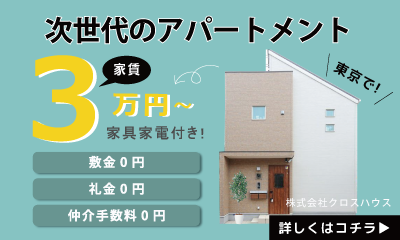

For more information about Xross House, please refer to the article below. If you need any assistance with renting from Xross House, please don’t hesitate to contact us.

Types of Admission Methods to Japanese Universities

There are 3 types of admission methods for international students to study at Japanese universities:
1. Application to Undergraduate Programs Taught in Japanese
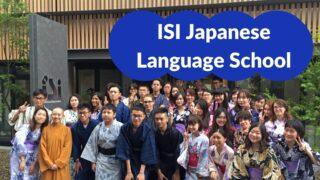
With this application method, you attend a Japanese language school in Japan after high school graduation and apply to universities from within Japan.

- You can learn very solid Japanese before entering university
- You receive professional support from Japanese language schools for university applications
- You get quick results because you apply from within Japan
- There are many undergraduate programs taught in Japanese
- You experience Japanese culture more closely by taking classes with Japanese students at university
- Applying from within Japan gives universities a positive impression that you’ve adapted to life in Japan
- It takes 1.5 years from high school graduation to university admission
- You need to secure budget for Japanese language school fees and living expenses
Get free support from the Japan Education Career team during the Japanese language school application process !
We provide free consultation services to help you apply to our partner Japanese language schools.
For more information about our partner schools, please refer to the article below.↓↓


Application Process
- Sep 2026Enter Japanese language school with student visa
- Oct 2026Begin Japanese language study
- Feb 2027Apply for Japan University Entrance Examination (EJU) – held twice yearly
- Jun 2027Take EJU
- Jul 2027EJU results announced
- Jul 2027Research target universities
- Jul 2027Apply for EJU (second time)
- Sep 2027Apply to private universities
- Nov 2027Take EJU (second time)
- Dec 2027EJU results announced
- Jan 2028Apply to national/public universities
- Feb 2028Private university acceptance announcements
- Mar 2028National/public university acceptance announcements
- Apr 2028University enrollment
- Admission to national and public universities is highly competitive, so we recommend first securing acceptance at a private university for peace of mind.
- The EJU is held twice a year, in June and November. You may use the results from either exam when applying to universities. If you take both, you can submit the higher score with your application.
Required Documents
Required documents vary depending on the university, but generally, the following documents are required:
- High school graduation certificate and transcripts
- Letters of recommendation
- Japanese language proficiency certificate (EJU or JLPT)
*EJU is usually sufficient, but some universities may also require you to take the JLPT. - English language proficiency certificate (TOEFL, TOEIC, IELTS, etc.)
- Academic ability certificate (EJU)
- University application form
- Interview examination
- Documents showing financial status
- Copy of passport
- Copy of residence card
How to Find Universities That Teach in Japanese
You can use the search engine below to find the university that’s right for you.
You can also research universities using the following university admissions guide for international students, which is updated annually↓↓↓
2. Application to Undergraduate Programs Taught in English
With this application method, you apply directly to target universities from your home country while still in high school. After acceptance and high school graduation, you obtain a student visa and come to Japan.
These programs typically begin in October.
- No time waste – you can start university immediately after high school graduation.
- More economical than coming to Japan and then applying to universities.
- You can learn Japanese while taking classes in English.
- Very few programs available, so only very limited numbers can enroll.
- Classmates are generally international students, so you can’t fully integrate with Japanese culture.
- You can’t learn professional-level Japanese unless you make additional personal efforts.
Required Documents
Required documents vary depending on the university, but generally, the following documents are required:
- High school graduation certificate and transcript
- Letters of recommendation
- English language proficiency certificate (TOEFL, TOEIC, IELTS, etc.)
- Academic ability certificate (EJU, SAT, etc.)
- University application form
- Interview examination
- Documents showing financial status
- Copy of passport
How to Find Universities That Teach in English
You can use the links below to search for universities where you can study in English.
Links to some of the programs that offer scholarships:
3. Application through Japanese Government Scholarship (MEXT)
This scholarship covers one year of Japanese language preparation followed by four years of undergraduate education. You apply through the Japanese embassy in your home country. If you go to Japan through this program, acceptance to national/public universities is almost guaranteed.]
Click here for more information.
Japanese University Tuition Fees
| University Type | Admission Fee | Tuition Fee | Total |
| National | 282,000 JPY | 535,800 JPY | 817,800 JPY |
| Public | 391,305 JPY | 536,363 JPY | 927,668 JPY |
| Private | 245,951 JPY | 930,943 JPY | 1,176,894 JPY |
How to Research Scholarship Information

The number of scholarships you can apply for before coming to Japan is very limited. After coming to Japan, there are many scholarship opportunities available for international students.
Scholarships Available Before Coming to Japan
- Japanese Government Scholarships (MEXT)
- Reservation Program for Monbukagakusho Honors Scholarship for Privately-Financed International Students by Pre-arrival Admission
- Scholarships provided by admitted universities
- Some private foundation scholarships (very limited)
Scholarships You Can Apply for After Arriving in Japan
- The Monbukagakusho Honors Scholarship for Privately-Financed International Students
- Scholarships provided by admitted universities
- Various private organizations (many options available)
How to Find Appropriate Scholarships
1. First, get information about available scholarships from the international student office of your admitted university
2. Utilize the following resources for comprehensive scholarship searches:
This article has answered questions about the Japanese university application process. If you have any unclear points, please feel free to contact us through social media or the contact form below. We sincerely hope that your university life in Japan will be fruitful and rewarding.
If you found this article or our activities helpful, we would greatly appreciate your support with a cup of coffee ☕✨